As teachers are beginning to head back to school, we are all looking for new ideas and activities to implement this school year. I've read several blogs and posts about folks wondering how other teachers use blogging in their classroom. I taught and used blogs in my classroom last year, and a few teachers have asked me to share the activities and lessons I did for my "blogging mini-unit". Here you go. Feel free to use and tweak my ideas, as well as add your own activities suggestions and ideas below.
The following activities and lessons were not necessarily designed/created by me, although I did tweak them to meet the needs of my classroom. I will gladly give credit for ideas/activities when I can.
Lesson/Activity #1: I started off by asking students about the social media/technology they use. After several answers, we moved the discussion to "why" people today use this technology. I used both discussions to transition to a conversation about blogs (ex. what are they, why people write them, how they differ from Facebook, Twitter, etc.). After getting a good idea of students' background knowledge of blogs and giving basics about blogs (ex. what they are & why they are used), we headed to the computer and checked out some blogs. I had students work in groups of three or four and check out several different blogs online. Ahead of time, I pre-selected and saved short-cuts to several different "kid appropriate" blogs. Groups were allowed to look at the blogs (from the ones I chose) that they wanted. Their task was to write down characteristics of effective blogs. (From the beginning I chose to use the words "effective" & "ineffective" instead of "good" & "bad".) After about 20 minutes, we came back together as a class and wrote down the characteristics they found. By the end of the class, we had a list of characteristics that make an effective blog. Here's a rubric that has the main characteristics on the left side of the chart. Not only did we ultimately use this rubric to "grade" blogs we looked at online, but I used it to assess/grade the blogs they wrote throughout the year. The rubric I used can be found here. Another possible rubric (made by Scholastic and includes an activity) can be found here.
Lesson/Activity #2: As a class we started by looking at a blog together. Students took turns points out things that either made it effective or ineffective. We also watched a short video on YouTube about why middle school students like about blogging. Find the YouTube video here.
Lesson/Activity #3: A huge component of teaching kids blogging, is to make sure they do it safely and respectfully. I started the "safety" lesson by asking students general rules for being/going online and while using social media. For the most part, they gave nearly all of the rules that needed to be given. I recorded rules they gave me on the board. After class I put the rules on a poster that hung in the classroom for the rest of the year and also made a hand-out of the rules for students. Here's an example of some possible rules from Scholastic.
Lesson/Activity #4: One of the characteristics of a blog is that it is used to cultivate discussions among readers and reviewers. Before students can be expected to respond effectively and appropriately to blogs, they need some instruction on the topic. I found a few different YouTube videos that I used. I really like the first one-- it's made my elementary students and provides clear instruction and examples. Find it here. The second video is super short, and I used it has a review on another day. Find this second video here. I also put together a resource sheet for students to use. Find the resource here.
Lesson/Activity #5: Before setting students loose to write and comment online, we did "paper blogging". This fabulous idea is from the blog "Notes from McTeach" dated September 5, 20120, and titled "Learning to Blog Using Paper". Find this amazing activity here. This activity gives students the opportunity to apply everything they have learned so far. They used the Blogging Rubric and Responding to Blogging resource to make sure that they included all of the components. We did this activity over a couple of days. They really did a good job with it and thoroughly enjoyed it.
Lesson/Activity #6: It was finally time to take the blogging online. Although there are several different blogging options available for students and classrooms, I chose to use Edmodo. The majority of my students already had some experience with Edmodo and the platform worked best for my classes. (Here's a link to Edmodo in case you need it.) For their first blog, I basically gave them the same prompt as from the "paper blogging" activity, I just told them to pick a different hobby. They completed all of the steps (rough draft, editing, revising, etc.) of writing. They typed their final drafts on Word and then copied and pasted them on to the page I set up on Edmodo. Students also had to leave meaningful comments on at least two of their classmates' blogs. It turns out that they really enjoyed reading each others' blogs-- I think they ended up reading and commenting for nearly a whole class period. It was a wonderful way to trick them into reading and writing! :)
Year-long practice and use: After learning and practicing the basics of blogging, it became a very useful tool for discussing stories, novels, and even skills throughout the year. When my small groups were working on different novels, I had an Edmodo page for each novel. I'd post questions and they'd reply either at home or during independent work time. I also found it useful for students who missed in-class discussions due to being absent. I simply posted the discussion questions on Edmodo and they responded to them so I still had a chance to assess their comprehension and understanding. Towards the end of the year Edmodo was also a useful classroom for incorporating "flipped classroom" strategies. For example, while doing theme, I posted a movie clip on Edmodo, and they needed to respond with what they thought the theme was and "text/clip" evidence.
Who knows what you'll find here. It's most likely a mish-mash of education/school stuff and recipes.
Thursday, July 17, 2014
Friday, June 13, 2014
Teachers need to eat- Easy Mediterranean Pasta with Chicken
Looks delicious, right?? And trust me, it's super easy. Today is a Friday at the end of a very long week and the second to last day of school. It was a long half day of packing and managing my students (they named themselves my "little minions") moving my classroom from downstairs to upstairs. Afterwards, we went out for a late lunch as a staff. A few of us then went back to school (I know, a glutton for punishment) to organize and put report cards in student folders.
So around 8pm this evening, I was hungry for something light & yummy, yet super easy to make because I barely had enough energy to get myself off the couch, let alone enough to do any 'real' cooking. I ended up grabbing some Mediterranean type veggies from the fridge, pre-made basil pesto, whole grain breaded chicken fingers, some feta and tossed it all with some pasta. It totally fit the bill! Yummy and WAY easy.
I'm sure there are tons of variations that you can create based on your tastes and what you have on hand. Also, the quantities of ingredients will depend on how many servings you want to make. I made just enough for me, although I ended up with two servings.
Ingredients:
- Frozen chicken tenders
- Pasta
- Sun-dried tomatoes
- Marinated artichoke hearts
- Kalamata olives
- Capers
- Feta cheese
- Basil Pesto
How to make:
1. Cook the chicken tenders and pasta according to the directions on the package.
2. Cut up the veggies you are using. I used sun-dried tomatoes, artichoke hearts, capers, and kalamata olives.
3. Toss the vegetables, basil pesto, and chicken with the pasta.
4. Sprinkle with feta cheese.
Enjoy this simple and delicious meal!
Saturday, June 7, 2014
Quotation Marks Antics
Throughout the year my students have really strengthened their writing. Their ideas are growing by leaps and bounds, and their grammar, structure, and organization is also improving. The one thing that continues to plague them, even my best writers, is consistently using and formatting dialogue properly. Why is it that students find using quotation marks correctly so difficult? This week I was feeling ambitious, so I decided to tackle it.
Here are a few activities and things I tried with my kiddos. Feel free to give them a try and let me know how they work out. I also welcome any other ideas you have.
- I started by telling my kiddos that I wrote a story and wanted their opinion. I displayed the story on the smart board. It was a story that contained lots of dialogue, but no quotations marks or proper punctuation or formatting. They quickly identified what the problem was. As a class, we went through and they edited it together.
- Next it was time for some buddy practice and reteaching opportunities for those who needed it. I found a wonderful FREE resource by Kristine Nannini on teacherspayteachers.com. Here's the link to the wonderful resource. Thanks Kristine! It provides great hands-on practice with a little scaffolding built in! As they worked in pairs, I floated around the room and gave assistance as needed, and also pulled a small reteach group for a few friends that were really struggling.
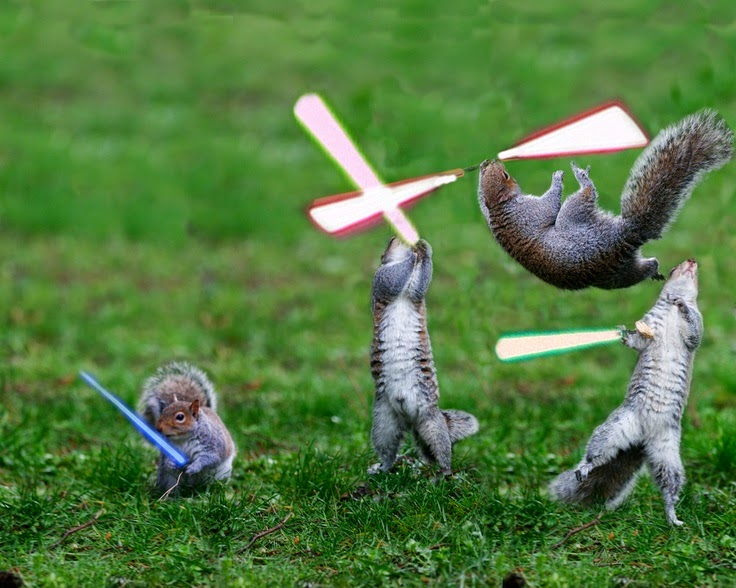
- Time to apply the skill to writing. I gave students the choice of either working in pairs or working independently. Most chose to work with a friend. I then posted three pictures for students to choose from.
- Their assignment was to write a short story that included dialogue between the two animals. I told them that of course it would be funny, but they just needed to be sure to write and format the dialogue correctly. They really enjoyed this activity and came up with some great conversations.
- 4. Independent Practice: Due to the way our schedule worked out, they ended up doing this part a few days later, so it really was a good indication of how much they remembered and could actually apply the skill in their writing. I posted one more picture, and instructed them to write a story (that included dialogue) based on the picture. They got a real hoot out of the picture and came up with some really creative and truly good stories :) And amazingly, they did a really good job writing their dialogue correctly!
- Picture credits:Snake & bird- http://www.flickr.com/photos/djphoenix18/3988720849/in/pool-1914019@N23/ Cat & mouse- http://pets.onas.ru/cat_mouse_strawberry_1.jpg.html Ant & Snail- http://www.zmescience.com/science/biology/ant-snail-amazing-picture-27062011/ Jedi Squirrels- http://500px.com/photo/1976424/jedi-squirrels-by-mark-white
Notice & Note Summer Book Club
Hello! Although I plan on enjoying my time off from school, I wanted take the opportunity to do a little personal professional development-- no classes or anything official, just a little something for personal enrichment.
This past year "Close Reading" was all the rage and although I gathered some useful info and strategies, I feel that this is an area that I want to explore a little more and plan a bit. I came across a book Notice & Note: Strategies for Close Reading by Kylene Beers & Robert E. Probst. It has some pretty good reviews and has been recommended to me more than once, so I thought this would be a good book to dig into this summer.
This is where you come in at. I'd love to get a group of educators to join me, so that we can have discussions and share ideas. Don't worry, I'm not proposing anything super structured or time (or energy) intensive. Just some casual discussion as we read. As I read, I'll post some questions for each chapter. Feel free to respond on that thread or pose your own questions, discussion topic, thought, or activity/lesson idea.
I've set up an Edmodo page for the book club. Click here to go to the page.
Here's the link address just in case: https://edmo.do/j/ac34ox
The group code is: kcc4fy
Here is the link to the book on Amazon.
Please invite others to join us!
Sunday, March 23, 2014
Point of View practice using Finding Nemo
For the past few weeks, my 5th grade class has been working on Point of View. We've gone beyond simply identifying 1st or 3rd person and are really analyzing how the narrator's/character's point of view/perspective affects the story and the message that readers receive. I found two great clips in Finding Nemo that are great for instruction or practice. I've listed the time that correlates to the clips on the DVD.
Example 1
@ 25:11-25:48 minutes- Nemo is being dumped into the dank in the dentist's office. I had the kids identify the setting and situation from Nemo's point of view/perspective. What does he see? How does he feel? What is he thinking? How did he get here?
@ 25:49-26:00 minutes- In this clip we get a look at the situation from the dentist's point of view. (He says he found Nemo struggling for his life in the reef, and he saved his life.) After watching this clip, the students had a quick discussion about perspective and how the same event can be perceived multiple ways. We then talked about how the perspective changes the story.
Example 2
28:40-29:22 minutes: The dentist shows Nemo (and company) the picture of his niece Darla and explains how Nemo is going to be her birthday gift this year. The other fish explain what happened to her birthday fish last year. I had the kids give me Darla's point of view about receiving a fish for her birthday, and then Nemo's point of view about being given to Darla.
Example 1
@ 25:11-25:48 minutes- Nemo is being dumped into the dank in the dentist's office. I had the kids identify the setting and situation from Nemo's point of view/perspective. What does he see? How does he feel? What is he thinking? How did he get here?
@ 25:49-26:00 minutes- In this clip we get a look at the situation from the dentist's point of view. (He says he found Nemo struggling for his life in the reef, and he saved his life.) After watching this clip, the students had a quick discussion about perspective and how the same event can be perceived multiple ways. We then talked about how the perspective changes the story.
Example 2
28:40-29:22 minutes: The dentist shows Nemo (and company) the picture of his niece Darla and explains how Nemo is going to be her birthday gift this year. The other fish explain what happened to her birthday fish last year. I had the kids give me Darla's point of view about receiving a fish for her birthday, and then Nemo's point of view about being given to Darla.
Saturday, March 15, 2014
Teachers have to eat: Parmesan Crusted Chicken with Olive Tapenade
Looking for something super easy to make, yet savory? Try this oven baked chicken with olive tapenade topped with a mixture Parmesan and bread crumbs.
What you'll need:
- 2 chicken breasts (split them in half)
- 1/2 cup olive tapenade (I used Wegmans)
- 3 tablespoons bread crumbs
- 2 tablespoons grated Parmesan cheese
- 2 tablespoons olive oil
- 1 tablespoon thyme
- bunch of fresh thyme sprigs
- 4 or 5 large cherry/vine ripened tomatoes
What you need to do:
1. Preheat the oven to 375.
2. Lay the sprigs of thyme in the bottom of a glass baking pan. Lay the 4 chicken breasts on top. Cut the tomatoes in half and place the tomatoes in the pan as well. Place the olive tapenade on top of the chicken-- evenly distribute.
3. Mix the bread crumbs, Parmesan cheese, thyme, and olive oil together. Spoon the crumb mixture on top of the chicken and tomatoes.
4. Bake for 30-40 minutes, until chicken is done.
I served mine with spinach & cheese ravioli
Sunday, March 9, 2014
Teachers have to eat: Easy Chicken Marsala
Chicken Marsala is one of those things that I order when out at a nice Italian restaurant, but never attempted to try myself. I just assumed it was too difficult-- especially if I wanted it to taste any good. Then one day I came across a recipe (by Savory Sweet Life) that claimed to not only be good but easy. So I made it and...
After making it once, I knew I would be making it regularly. I've made it five or six times now, making minor tweaks each time. I think I finally have it to what I consider perfection. I wanted to have a little more sauce for the pasta & veggies yet still maintain a rich taste. If you'd like to check out the original recipe go here; if you'd like my tweaked recipe, keep reading. It takes approximately 15 minutes prep, and 30 minutes cook time.
Here is what you'll need:
- 2 skinless, boneless, chicken breasts
- salt & pepper
- 1/2 cup flour
- a few tablespoons olive oil
- 8 ounces of mushrooms, sliced & cleaned
- 2 tablespoons butter
- 1 cup Marsala wine
- 1/2 cup sherry
- 1 tub of chicken stock Concentrate (the one I use is by Knorr)
- 2 tablespoons heavy cream
After making it once, I knew I would be making it regularly. I've made it five or six times now, making minor tweaks each time. I think I finally have it to what I consider perfection. I wanted to have a little more sauce for the pasta & veggies yet still maintain a rich taste. If you'd like to check out the original recipe go here; if you'd like my tweaked recipe, keep reading. It takes approximately 15 minutes prep, and 30 minutes cook time.
Here is what you'll need:
- 2 skinless, boneless, chicken breasts
- salt & pepper
- 1/2 cup flour
- a few tablespoons olive oil
- 8 ounces of mushrooms, sliced & cleaned
- 2 tablespoons butter
- 1 cup Marsala wine
- 1/2 cup sherry
- 1 tub of chicken stock Concentrate (the one I use is by Knorr)
- 2 tablespoons heavy cream
Start by cutting each breast in half, pounding it to make it thinner and liberally sprinkle with salt & pepper.
Next, heat a few tablespoons of oil on medium/medium-high, dredge the breast through flour, and heat two at a time. It took about 4 minutes per side. When each batch is finished, keep warm in the oven.
While the chicken is cooking, gather your other supplies. I have used "real" wine & sherry, but found it a little more convenient to have the cooking wine on hand, and it tastes really good using this stuff :)
After all of the chicken is cooked, using the same pan, reduce heat to medium to saute the mushrooms in butter [for about 4 minutes]. Sprinkle with salt & pepper.
Next, add the Marsala wine, sherry, chicken stock concentrate, and cream. Stir and simmer to allow it to reduce a little bit. I reduce heat a tad and let it simmer for about 6-7 minutes.
I like to serve this with gnocchi-- my pasta of choice, asparagus-- my green vegetable of choice, and a glass of white. It makes a fabulous meal.
Subscribe to:
Comments (Atom)