Who knows what you'll find here. It's most likely a mish-mash of education/school stuff and recipes.
Saturday, June 7, 2014
Notice & Note Summer Book Club
Hello! Although I plan on enjoying my time off from school, I wanted take the opportunity to do a little personal professional development-- no classes or anything official, just a little something for personal enrichment.
This past year "Close Reading" was all the rage and although I gathered some useful info and strategies, I feel that this is an area that I want to explore a little more and plan a bit. I came across a book Notice & Note: Strategies for Close Reading by Kylene Beers & Robert E. Probst. It has some pretty good reviews and has been recommended to me more than once, so I thought this would be a good book to dig into this summer.
This is where you come in at. I'd love to get a group of educators to join me, so that we can have discussions and share ideas. Don't worry, I'm not proposing anything super structured or time (or energy) intensive. Just some casual discussion as we read. As I read, I'll post some questions for each chapter. Feel free to respond on that thread or pose your own questions, discussion topic, thought, or activity/lesson idea.
I've set up an Edmodo page for the book club. Click here to go to the page.
Here's the link address just in case: https://edmo.do/j/ac34ox
The group code is: kcc4fy
Here is the link to the book on Amazon.
Please invite others to join us!
Sunday, March 23, 2014
Point of View practice using Finding Nemo
For the past few weeks, my 5th grade class has been working on Point of View. We've gone beyond simply identifying 1st or 3rd person and are really analyzing how the narrator's/character's point of view/perspective affects the story and the message that readers receive. I found two great clips in Finding Nemo that are great for instruction or practice. I've listed the time that correlates to the clips on the DVD.
Example 1
@ 25:11-25:48 minutes- Nemo is being dumped into the dank in the dentist's office. I had the kids identify the setting and situation from Nemo's point of view/perspective. What does he see? How does he feel? What is he thinking? How did he get here?
@ 25:49-26:00 minutes- In this clip we get a look at the situation from the dentist's point of view. (He says he found Nemo struggling for his life in the reef, and he saved his life.) After watching this clip, the students had a quick discussion about perspective and how the same event can be perceived multiple ways. We then talked about how the perspective changes the story.
Example 2
28:40-29:22 minutes: The dentist shows Nemo (and company) the picture of his niece Darla and explains how Nemo is going to be her birthday gift this year. The other fish explain what happened to her birthday fish last year. I had the kids give me Darla's point of view about receiving a fish for her birthday, and then Nemo's point of view about being given to Darla.
Example 1
@ 25:11-25:48 minutes- Nemo is being dumped into the dank in the dentist's office. I had the kids identify the setting and situation from Nemo's point of view/perspective. What does he see? How does he feel? What is he thinking? How did he get here?
@ 25:49-26:00 minutes- In this clip we get a look at the situation from the dentist's point of view. (He says he found Nemo struggling for his life in the reef, and he saved his life.) After watching this clip, the students had a quick discussion about perspective and how the same event can be perceived multiple ways. We then talked about how the perspective changes the story.
Example 2
28:40-29:22 minutes: The dentist shows Nemo (and company) the picture of his niece Darla and explains how Nemo is going to be her birthday gift this year. The other fish explain what happened to her birthday fish last year. I had the kids give me Darla's point of view about receiving a fish for her birthday, and then Nemo's point of view about being given to Darla.
Saturday, March 15, 2014
Teachers have to eat: Parmesan Crusted Chicken with Olive Tapenade
Looking for something super easy to make, yet savory? Try this oven baked chicken with olive tapenade topped with a mixture Parmesan and bread crumbs.
What you'll need:
- 2 chicken breasts (split them in half)
- 1/2 cup olive tapenade (I used Wegmans)
- 3 tablespoons bread crumbs
- 2 tablespoons grated Parmesan cheese
- 2 tablespoons olive oil
- 1 tablespoon thyme
- bunch of fresh thyme sprigs
- 4 or 5 large cherry/vine ripened tomatoes
What you need to do:
1. Preheat the oven to 375.
2. Lay the sprigs of thyme in the bottom of a glass baking pan. Lay the 4 chicken breasts on top. Cut the tomatoes in half and place the tomatoes in the pan as well. Place the olive tapenade on top of the chicken-- evenly distribute.
3. Mix the bread crumbs, Parmesan cheese, thyme, and olive oil together. Spoon the crumb mixture on top of the chicken and tomatoes.
4. Bake for 30-40 minutes, until chicken is done.
I served mine with spinach & cheese ravioli
Sunday, March 9, 2014
Teachers have to eat: Easy Chicken Marsala
Chicken Marsala is one of those things that I order when out at a nice Italian restaurant, but never attempted to try myself. I just assumed it was too difficult-- especially if I wanted it to taste any good. Then one day I came across a recipe (by Savory Sweet Life) that claimed to not only be good but easy. So I made it and...
After making it once, I knew I would be making it regularly. I've made it five or six times now, making minor tweaks each time. I think I finally have it to what I consider perfection. I wanted to have a little more sauce for the pasta & veggies yet still maintain a rich taste. If you'd like to check out the original recipe go here; if you'd like my tweaked recipe, keep reading. It takes approximately 15 minutes prep, and 30 minutes cook time.
Here is what you'll need:
- 2 skinless, boneless, chicken breasts
- salt & pepper
- 1/2 cup flour
- a few tablespoons olive oil
- 8 ounces of mushrooms, sliced & cleaned
- 2 tablespoons butter
- 1 cup Marsala wine
- 1/2 cup sherry
- 1 tub of chicken stock Concentrate (the one I use is by Knorr)
- 2 tablespoons heavy cream
After making it once, I knew I would be making it regularly. I've made it five or six times now, making minor tweaks each time. I think I finally have it to what I consider perfection. I wanted to have a little more sauce for the pasta & veggies yet still maintain a rich taste. If you'd like to check out the original recipe go here; if you'd like my tweaked recipe, keep reading. It takes approximately 15 minutes prep, and 30 minutes cook time.
Here is what you'll need:
- 2 skinless, boneless, chicken breasts
- salt & pepper
- 1/2 cup flour
- a few tablespoons olive oil
- 8 ounces of mushrooms, sliced & cleaned
- 2 tablespoons butter
- 1 cup Marsala wine
- 1/2 cup sherry
- 1 tub of chicken stock Concentrate (the one I use is by Knorr)
- 2 tablespoons heavy cream
Start by cutting each breast in half, pounding it to make it thinner and liberally sprinkle with salt & pepper.
Next, heat a few tablespoons of oil on medium/medium-high, dredge the breast through flour, and heat two at a time. It took about 4 minutes per side. When each batch is finished, keep warm in the oven.
While the chicken is cooking, gather your other supplies. I have used "real" wine & sherry, but found it a little more convenient to have the cooking wine on hand, and it tastes really good using this stuff :)
After all of the chicken is cooked, using the same pan, reduce heat to medium to saute the mushrooms in butter [for about 4 minutes]. Sprinkle with salt & pepper.
Next, add the Marsala wine, sherry, chicken stock concentrate, and cream. Stir and simmer to allow it to reduce a little bit. I reduce heat a tad and let it simmer for about 6-7 minutes.
I like to serve this with gnocchi-- my pasta of choice, asparagus-- my green vegetable of choice, and a glass of white. It makes a fabulous meal.
Thursday, February 27, 2014
Notice & Wonder
We all know that critical thinking is the "new thing". Early this year a teacher at my school (thanks, Jeanne) introduced us to a quick and easy strategy to encourage and have kids practice using critical thinking. Ask the two questions: What do you notice? and What do you wonder?
You know as well as I do, that when we ask kids, "Do you have any questions?" and "What do you think?", the responses are few and far between. By asking, "What do you notice?", the kids are motivated to get involved and tell you what they see. As the discussion continues, 'see' moves into a deeper 'notice'. By posing "What do you wonder?", the kids naturally make connections between what they have noticed and their prior knowledge and extend upon it. By using these two simple questions, you'll have kids thinking critically, and they won't even know it!
And the great thing about "Notice & Wonder", is that it can work for ANY subject. You can use it for Math problems, Science experiments, or while using primary resources or even reading a text in Social Studies. Since I'm a reading teacher, I have lots of ideas on how to use it in Reading :)
Anyways, as I was perusing Pinterest, I came across some great photos pinned by Suzy Brooks. She mentioned using them for a journal prompt. As I started thinking about how I could use them in my classroom, I suddenly thought of "Notice & Wonder". These photos will be great for giving students the chance to think critically, ask questions, dig deeper, and make connections. I can see them working for a journal prompt or a discussion.
Photos retrieved from http://media-cache-ec0.pinimg.com/originals/b2/54/1f/b2541f2d3ca9cdc548802a33a3122407.jpg, http://www.moillusions.com/elevator-optical-illusion-in-london.html/elevator4-1/, http://media-cache-ec0.pinimg.com/originals/01/bb /3d/01bb3d0cca1adc337e9b726567aaef84.jpg respectively
You know as well as I do, that when we ask kids, "Do you have any questions?" and "What do you think?", the responses are few and far between. By asking, "What do you notice?", the kids are motivated to get involved and tell you what they see. As the discussion continues, 'see' moves into a deeper 'notice'. By posing "What do you wonder?", the kids naturally make connections between what they have noticed and their prior knowledge and extend upon it. By using these two simple questions, you'll have kids thinking critically, and they won't even know it!
And the great thing about "Notice & Wonder", is that it can work for ANY subject. You can use it for Math problems, Science experiments, or while using primary resources or even reading a text in Social Studies. Since I'm a reading teacher, I have lots of ideas on how to use it in Reading :)
Anyways, as I was perusing Pinterest, I came across some great photos pinned by Suzy Brooks. She mentioned using them for a journal prompt. As I started thinking about how I could use them in my classroom, I suddenly thought of "Notice & Wonder". These photos will be great for giving students the chance to think critically, ask questions, dig deeper, and make connections. I can see them working for a journal prompt or a discussion.
Photos retrieved from http://media-cache-ec0.pinimg.com/originals/b2/54/1f/b2541f2d3ca9cdc548802a33a3122407.jpg, http://www.moillusions.com/elevator-optical-illusion-in-london.html/elevator4-1/, http://media-cache-ec0.pinimg.com/originals/01/bb /3d/01bb3d0cca1adc337e9b726567aaef84.jpg respectively
Friday, February 14, 2014
Writing Prompt: Giving Instructions
Here's a real-life scenario writing prompt for giving instructions.
With a lot of winter weather recently, you've been hired to write an article explaining what to do in case someone becomes stranded in a snowstorm. Use the 'order & sequence' text structure to give detailed instructions/directions about what to do and how to survive should someone become stranded in a snowstorm.
Thursday, February 6, 2014
Pinterest for Historical Figures
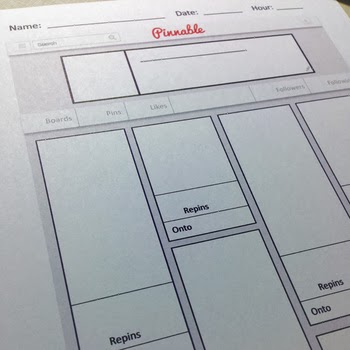
On the docket today was to read a biography about Jane Addams and practice the skills we've been learning so far in our ELA unit. You know, summarizing, author's view point.... As I planned the lesson, I just couldn't, in good conscience, have them read, take notes and then write yet another summary. I feel that that's all we have been doing lately. Deciding to not do a basic summary was easy; figuring out what to do instead was not. What task can they do that's "real world", tests their comprehension, and encourages connections and higher level thinking? Then it came to me....
To demonstrate their comprehension of Jane Addams, her life, and accomplishments and to give them a chance to synthesize and use this knowledge, I had them create a Pinterest page they think Jane would have if she was alive today. Based on the information they learned, they needed to decide what books, movies, hobbies, organizations, etc. Jane would like and be interested in. They really enjoyed the activity and it made them REALLY think! They drew pictures, symbols, and wrote description, just like a real Pinterest page. I found the above "Pinterest like" template made by Best Teacher Resources on TPT for only a dollar! Her blog can be found here, and a link to this template here. For an extension, students could be asked to justify why they chose the items they did. This would give them the opportunity to cite the text.
Common Core Standards: Reading Informational Text Anchor 1, 2, and 3
To demonstrate their comprehension of Jane Addams, her life, and accomplishments and to give them a chance to synthesize and use this knowledge, I had them create a Pinterest page they think Jane would have if she was alive today. Based on the information they learned, they needed to decide what books, movies, hobbies, organizations, etc. Jane would like and be interested in. They really enjoyed the activity and it made them REALLY think! They drew pictures, symbols, and wrote description, just like a real Pinterest page. I found the above "Pinterest like" template made by Best Teacher Resources on TPT for only a dollar! Her blog can be found here, and a link to this template here. For an extension, students could be asked to justify why they chose the items they did. This would give them the opportunity to cite the text.
Common Core Standards: Reading Informational Text Anchor 1, 2, and 3
Subscribe to:
Posts (Atom)